

═══════════════════════════════════════════
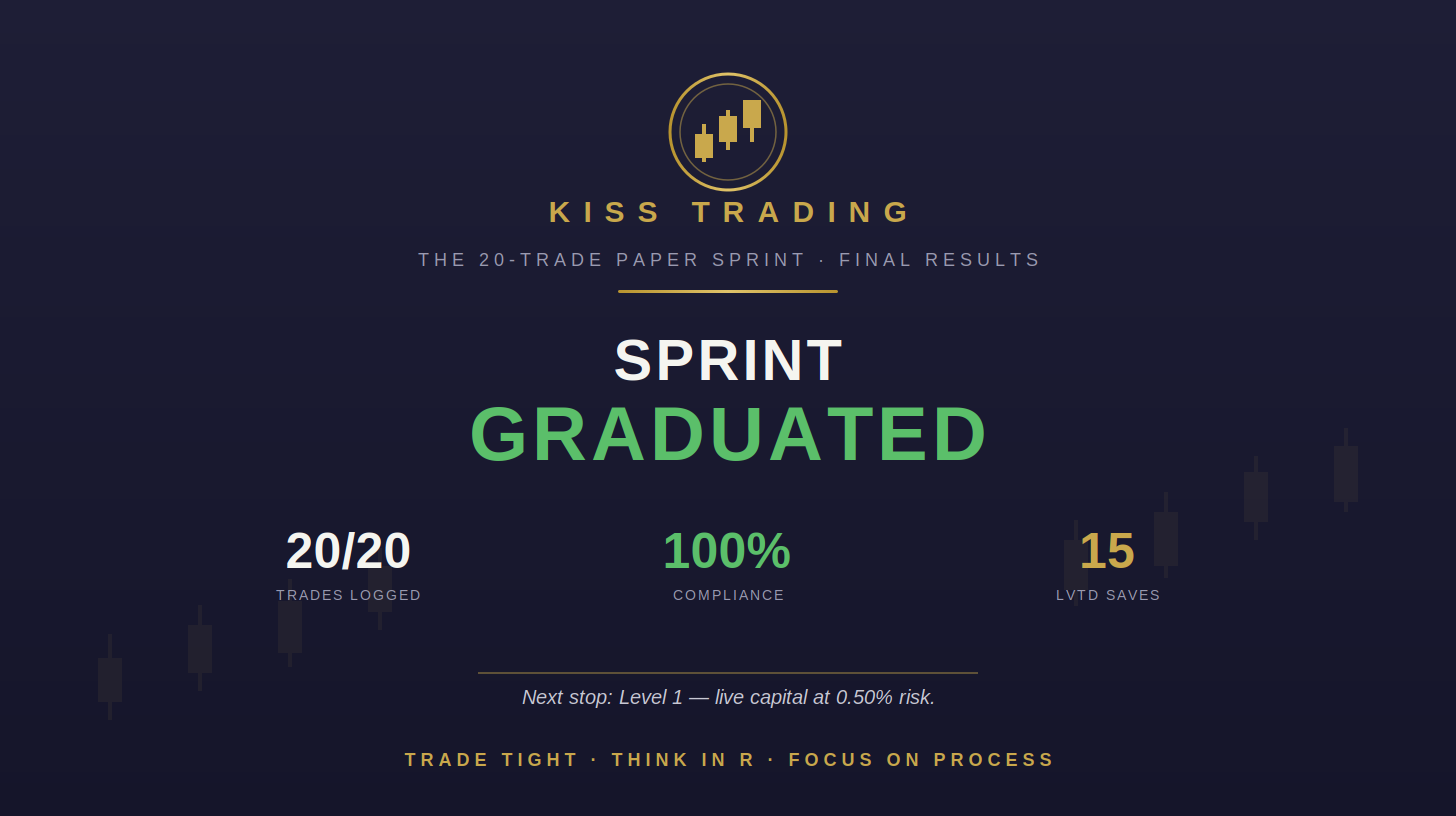
THE SPRINT IS OVER. IT WENT PERFECT.
═══════════════════════════════════════════
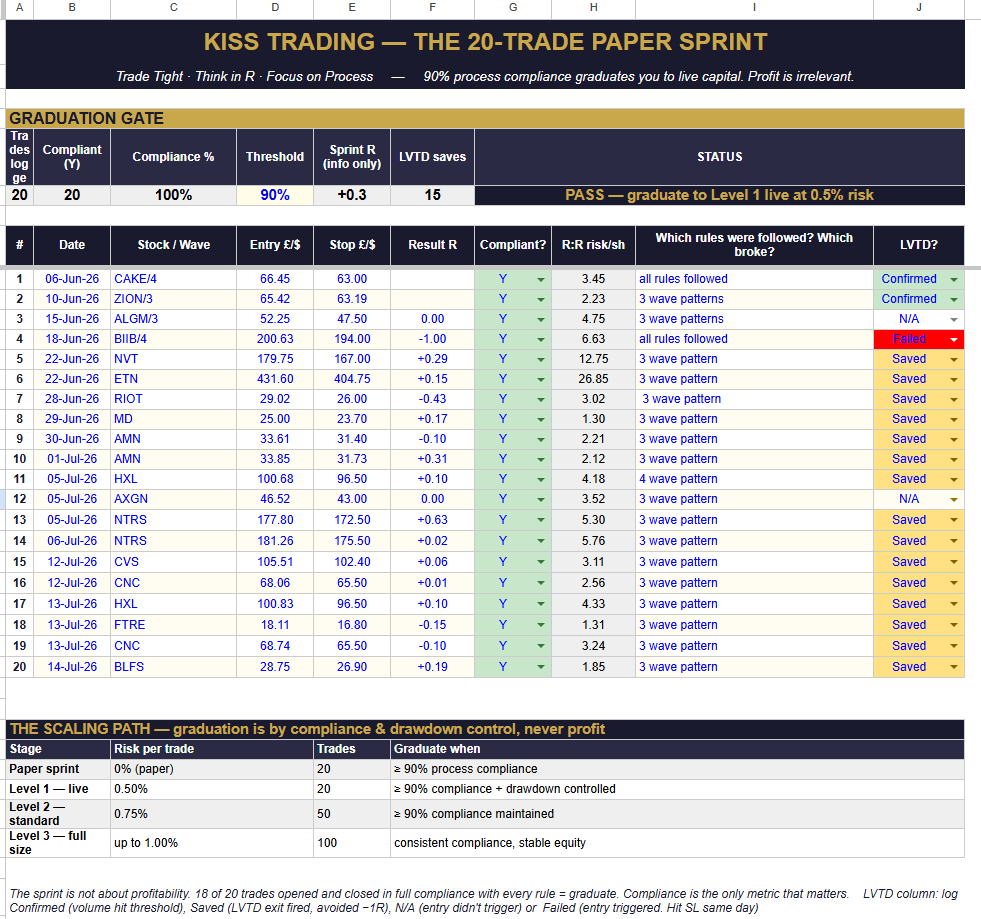
Twenty trades logged. Twenty compliant. 100%.
The bar to graduate was 90% — eighteen out of twenty opened and closed
in full compliance with every rule. This sprint didn’t clear that bar,
it cleared it by ten points. Every single trade, from the first order on
CAKE back on June 6th to the last LVTD exit on BLFS five weeks later,
followed the process exactly as written. No exceptions taken. No rule
bent because a chart looked too good to pass up.
That was always the only goal. Not profit. Compliance. And now it’s time
to talk about what compliance actually produced — because the honest
answer needs two different numbers to tell it properly.
═══════════════════════════════════════════
THE SCORECARD
═══════════════════════════════════════════
Trades logged: 20 / 20
Compliant: 20 / 20 (100%)
Compliance threshold: 90% — cleared by 10 points
LVTD saves: 15 / 20 (75%)
Losses of -1R: 1 (BIIB, trade #4 — the designed exception)
Sprint R (closed trades): +0.30R
STATUS: PASS — graduate to Level 1, live capital at 0.50% risk.
═══════════════════════════════════════════
TWO NUMBERS, BOTH TRUE
═══════════════════════════════════════════
Here’s where it gets interesting. The tracker’s official Sprint R —
the number built from CLOSED trades only — reads +0.30R. Over five
weeks and twenty trades, that looks close to flat. If you only read
that number, the honest reaction is “fine, nothing special.”
But two positions are still open. CAKE (trade #1, opened June 6th) and
ZION (trade #2, opened June 10th) both ran past +2R weeks ago, both had
half the position sold at that mark, both have their stops sitting at
breakeven. They’re not in the closed-trade R because they’re not
closed — but they are very much part of what this sprint actually did.
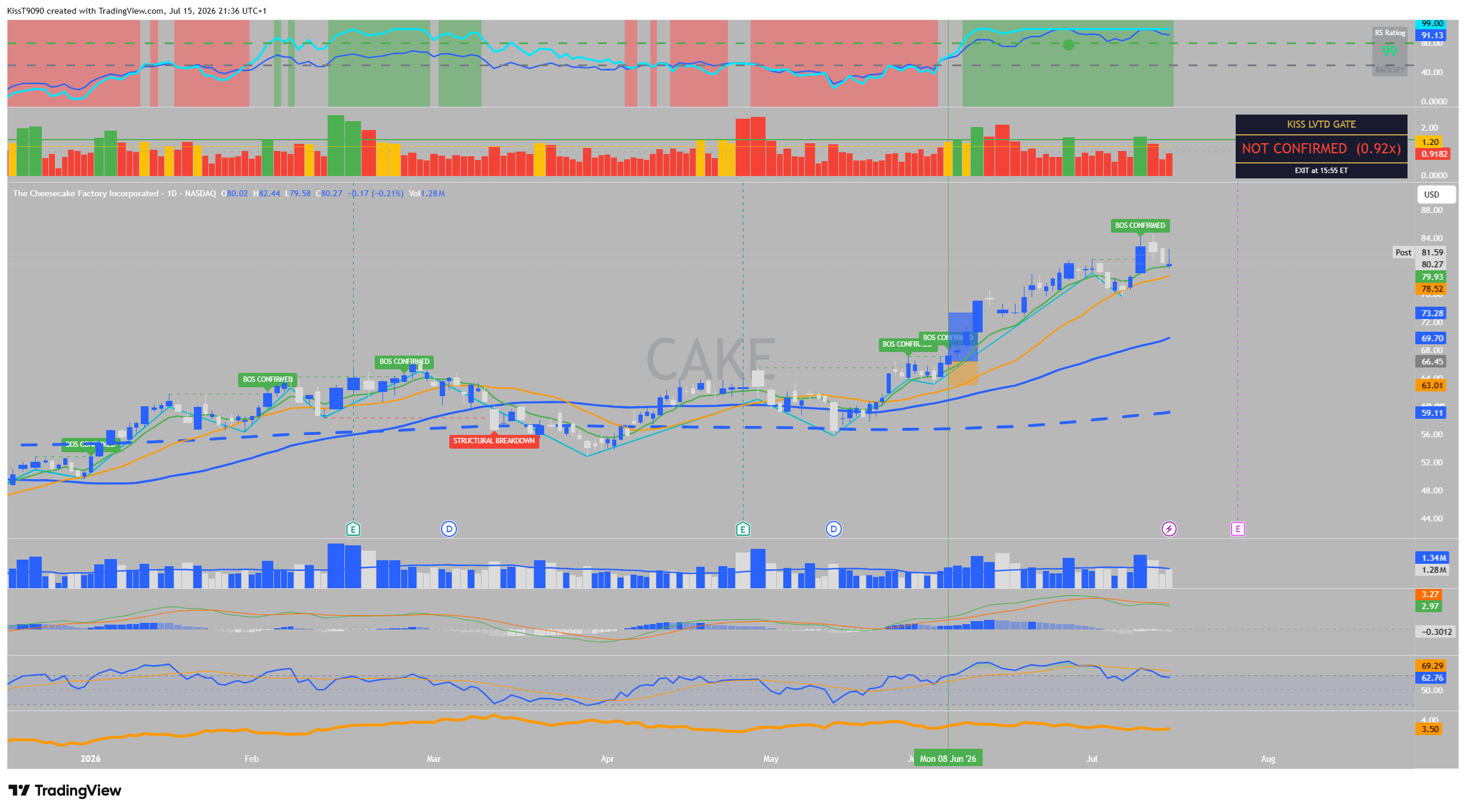
CAKE is sitting at roughly +3.00R blended across the position — half
banked at +2R, the other half still running with the trend, currently
marking closer to +4R on its own.
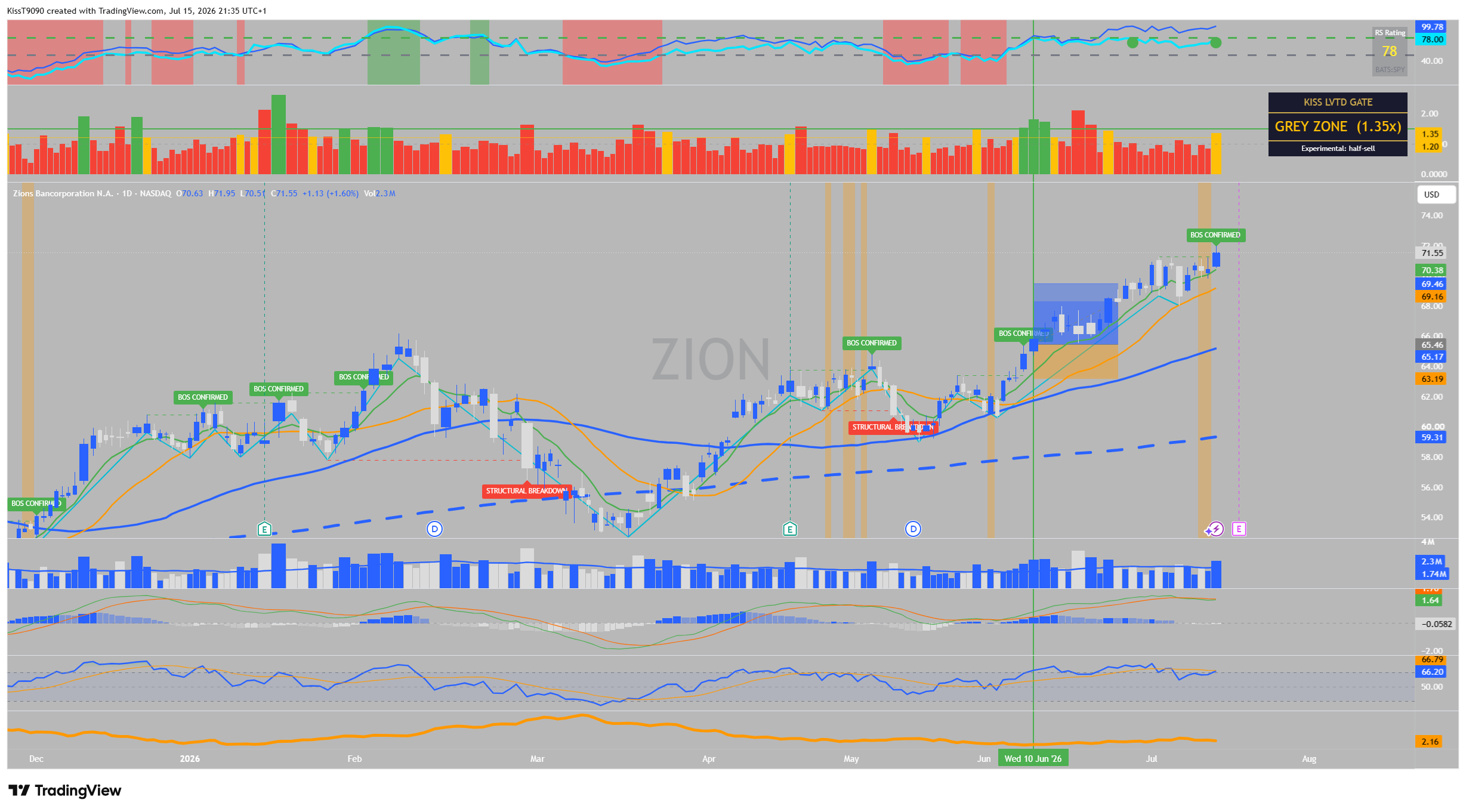
ZION blends to roughly +2.38R the same way — half locked in, half still
compounding.
Add those to the closed-trade R and the sprint’s real total is closer to
+5.7R, not +0.3R. Same twenty trades. Same rules. Two very different
headlines depending on which number you read.
═══════════════════════════════════════════
WHY THE TRACKER REPORTS THE SMALLER NUMBER ON PURPOSE
═══════════════════════════════════════════
This isn’t a flaw in the tracking. It’s the point.
Sprint R is marked “info only” for exactly this reason: unrealized gains
on open positions can evaporate, and a tracker that counted them as
locked-in profit would be lying about how much risk is actually still on
the table. +0.30R is the honest, conservative number — what’s actually
banked, no assumptions.
But the gap between +0.30R and +5.7R isn’t noise. It’s the clearest
possible illustration of what this whole system is built to do:
→ CUT FAST when the volume doesn’t confirm. 15 of 20 trades got saved by
the LVTD gate — some for small gains, some for small losses, all of
them capped before they could become the -1R that BIIB was allowed to
be exactly once. That discipline is what kept the closed-trade number
small and safe instead of deeply negative.
→ LET WINNERS RUN when the trend actually holds. CAKE and ZION never
got touched once they proved themselves past +2R. No early profit-
taking out of nerves, no manually tightened stop, no “just in case.”
The 20 MA trail is still doing its job, five and six weeks later.
Fifteen small, boring, controlled outcomes on one side. Two winners left
completely alone on the other. Both halves of the same discipline,
pointed in opposite directions — and together they produced a real
result while the tracker’s headline number stayed calm.
═══════════════════════════════════════════
WHAT GRADUATES NEXT
═══════════════════════════════════════════
Per the scaling path, this account moves to Level 1: live capital, 0.50%
risk per trade, twenty more trades, same 90% compliance bar. The size is
real now. The rules are not new.
Nothing about the process changes. The DAY-Order Loop, the Retest
Shield, the dynamic ceiling, the LVTD gate at 15:45 ET — all of it stays
exactly as strict as it’s been on paper. The only thing that’s different
is that the numbers will matter to an actual account, which is precisely
why the discipline had to be proven first, on paper, before it was
allowed to matter.
═══════════════════════════════════════════
THE TAKEAWAY
═══════════════════════════════════════════
Twenty trades. Twenty compliant. A closed-trade record that looks almost
uneventful, sitting on top of two winners that turned “uneventful” into
one of the better five-week stretches this account has had — simply by
never being interfered with.
That’s not a coincidence. That’s what happens when cutting losses fast
and letting winners run are both treated as non-negotiable, at the exact
same time, for the exact same reason.
Level 1 starts now. Same process. Every time.
───────────────────────────────────────────
Trade Tight · Think in R · Focus on Process
Trade Tight, RB
───────────────────────────────────────────
⚠️ Educational only. Not financial advice. This is a paper sprint — a
public record of process, not a profit claim. Always DYOR.